Preventive Dentist for Kids
in Lawrence, Lenexa & Prairie Village, KS
At Honey Bee Pediatric Dental Co., we provide preventive services to help children build strong oral health habits early. Our board-certified pediatric dentists focus on prevention, education, and a calm, kid-friendly experience that helps children feel comfortable in the dental chair. We also bring anticipatory guidance into every stage of care, so parents know what to expect as their child grows, and how to protect healthy smiles at home. To schedule your child’s visit, call our practice, and we will help you choose the best appointment time.
What Is Pediatric Preventive Dentistry, and Why Is It Important?
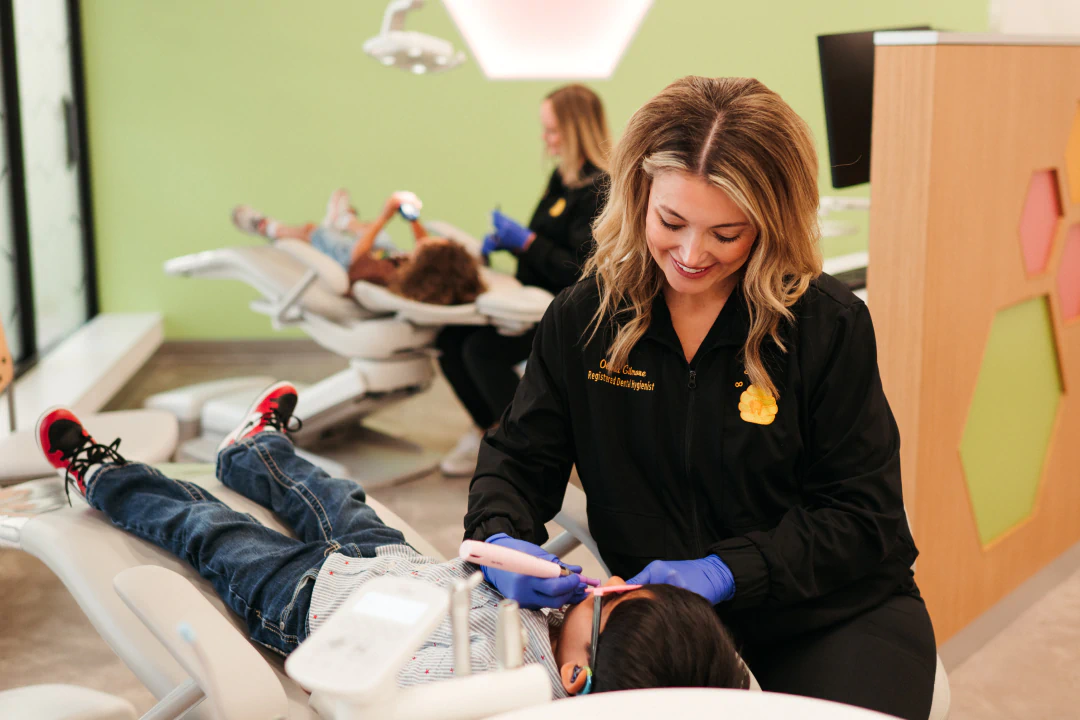
Pediatric preventive dentistry is focused care that helps protect a child’s teeth and gums before problems start. Instead of waiting for pain or visible damage, preventive care helps identify early risk factors and guides families toward habits that support lifelong oral health.
Preventive care is important because it helps:
- Reduce the risk of tooth decay and early childhood cavities
- Support healthier gums and reduce inflammation
- Catch concerns early, before they become urgent or more complex
- Monitor oral growth and dental development over time
- Build confidence, so children develop a positive relationship with dental visits
A key part of our approach is anticipatory guidance, which means we share age-specific guidance and practical next steps as your child’s needs change. This allows parents to stay ahead of common issues and feel confident supporting healthy routines at home.
When Should My Child First See a Pediatric Dentist?
Most dental professionals recommend a child’s first visit on or before their first birthday, or within six months of the first tooth erupting. Early visits help establish a baseline for oral health and give parents trusted guidance during the earliest stages of development.
What to Expect at a First Pediatric Dental Visit
During the first appointment, our team will:
- Gently examine the teeth, gums, and oral tissues
- Assess early risk factors for cavities
- Discuss teething discomfort and how to soothe it safely
- Review feeding habits, oral hygiene, and daily routines
- Share age-appropriate guidance for brushing and home care
Our goal is to make the experience comfortable for both child and parent. Early visits are not only clinical, but they also help build familiarity and trust, so future appointments feel routine.
Pediatric Dentistry for a Lifetime of Oral Health
Visit the Hive for Happy, Healthy Smiles
How Often Should Children Get Dental Checkups?
For most children, dental checkups are recommended every six months. These visits help keep teeth clean, track changes in development, and address concerns before they escalate.
Some children may benefit from more frequent preventive visits if they have a higher risk of tooth decay. Risk can be influenced by diet, home-care habits, previous cavities, enamel strength, medical conditions, or other factors.
Why Consistent Preventive Visits Matter
Regular checkups support:
- Thorough professional cleaning that removes plaque buildup
- Early identification of enamel changes and developing cavities
- Ongoing coaching for brushing and flossing technique
- Monitoring of bite alignment and dental development
- Preventive treatments that strengthen enamel and reduce risk
What Happens If My Child Skips Preventive Dental Visits?
Skipping preventive visits can lead to problems that develop quietly and become more difficult to treat later. Many early issues do not cause pain at first, which is why prevention matters.
When preventive care is delayed, children may face:
- Increased likelihood of cavities and enamel breakdown
- More extensive treatment needs over time
- Greater risk of infection or discomfort
- Missed opportunities to correct habits that contribute to decay
- Less monitoring of growth and bite development, which can affect spacing and alignment
What Preventive Dental Services Are Available at Honey Bee Pediatric Dental Co.?
We offer a full range of dental treatments designed to protect developing smiles and support healthy routines. Each recommendation is personalized, based on your child’s age, risk factors, and dental development.
- Teeth Cleanings: Professional cleanings remove plaque buildup that can contribute to tooth decay and help keep your child’s smile feeling fresh and healthy between visits.
- Dental Exams: During the exam, we assess teeth and gums, check for early signs of tooth decay, and evaluate overall oral development. If we notice a concern, we explain what we found and walk you through the next best step clearly.
- Infant Evaluations: Infant evaluations help establish a baseline early. We assess oral tissues, discuss feeding and comfort habits, and guide parents through teething and early home-care routines.
- Fluoride Treatments: Fluoride helps strengthen enamel and supports cavity prevention. We may recommend topical fluoride or fluoride varnish depending on your child’s needs, risk level, and daily routine.
- Digital Dental X-Rays: Digital imaging helps us see what a visual exam cannot. We use imaging when appropriate to evaluate tooth development, identify decay between teeth, assess injuries, and examine supporting structures, with low radiation exposure.
- Dental Sealants: Sealants are a protective coating placed on the chewing surfaces of molars. They help block food and bacteria from settling into grooves and can significantly reduce cavity risk for many children.
- Silver Diamine Fluoride: Silver diamine fluoride is a conservative option that can help slow or stop cavity progression in certain cases. It may be recommended when a noninvasive approach is beneficial, especially for young children or those who need a gentler starting point.
- Space Maintainers: When a child loses a tooth early, nearby teeth can drift. Space maintainers help hold room for the adult tooth and support healthier spacing and alignment.
- Growth and Development Monitoring: Oral development changes quickly during childhood. Monitoring helps us evaluate spacing, eruption patterns, and bite development so we can identify concerns early and guide families with clear next steps.
How Can I Prevent Cavities in My Child’s Teeth Between Visits?
Prevention at home is one of the most powerful ways to protect a child’s smile. We focus on practical guidance that fits real family routines.
To help reduce cavity risk between visits:
- Brush twice daily with a fluoride toothpaste, using the right amount for your child’s age
- Floss once daily as soon as teeth begin touching
- Limit frequent snacking and sugary drinks, especially between meals
- Encourage water intake throughout the day
- Build a consistent bedtime routine that includes brushing
- Address habits that may increase risk, such as prolonged bottle use or frequent sippy cup exposure
What Are the Signs My Child May Be at High Risk for Cavities?
Some children develop cavities more easily due to a combination of habits, enamel strength, diet, and daily home care. Identifying risk early helps families take action before decay progresses.
Your child may be at higher risk for cavities if you notice:
- Frequent snacking or sugary drinks throughout the day
- A history of cavities in the child or immediate family
- Visible plaque buildup or difficulty brushing thoroughly
- Chalky white spots on teeth, which can be an early sign of enamel weakening
- Crowding, deep grooves, or hard-to-clean areas
- Premature tooth loss or spacing concerns
- Special healthcare needs or medical factors that impact oral health
How Much Does Preventive Dental Care for Kids Cost?
The cost of preventive dental care depends on which services are needed and whether your child’s visit includes additional preventive treatments. Many families use dental insurance benefits for exams, cleanings, imaging when needed, and preventive treatments, depending on plan coverage.
We also offer a pediatric dental membership plan, which can be helpful for families who want predictable costs and a clear preventive schedule. Preventive care is often more cost-effective than treating advanced decay, and it supports long-term oral health by reducing the chance of more extensive procedures later.
For the most accurate estimate, call our office so we can review your child’s needs and discuss coverage and options.
Why Choose Honey Bee Pediatric Dental Co. for Your Child’s Preventive Dentistry?
Families choose Honey Bee Pediatric Dental Co. because we combine specialized training with an education-first approach that supports both children and parents. Our board-certified pediatric dentists bring advanced clinical background and a thoughtful, calm style of care that helps children feel safe and understood.
We are proud to offer:
- Board-certified pediatric dentists with advanced pediatric training
- Active affiliations with leading professional dental organizations
- A supportive, kid-friendly dental environment designed to ease anxiety
- A prevention-focused philosophy that prioritizes long-term health
- Anticipatory guidance that helps parents understand milestones and next steps
- A collaborative approach that respects parent concerns without judgment
- Sedation options when appropriate, based on individual needs
- An after-hours emergency call line for established patients

Schedule Your Child’s Preventive Dental Appointment at Honey Bee Pediatric Dental Co.
Preventive dentistry is one of the most effective ways to protect your child’s smile and support healthy development over time. At Honey Bee Pediatric Dental Co., we provide pediatric preventive dentistry in Lawrence, Lenexa & Prairie Village, KS, with board-certified pediatric dentists who prioritize comfort, education, and long-term results.
Call our office today to schedule your child’s next preventive visit and take the next step toward a healthier, more confident smile.