
Pediatric Emergency Dentistry
In Lawrence, Lenexa, And Prairie Village, KS
Dental emergencies can happen without warning, and when your child is in pain, you need calm guidance from a team that understands children’s teeth, emotions, and developing smiles. Honey Bee Pediatric Dental Co. provides emergency care that helps families navigate urgent toothaches, dental trauma, broken teeth, swelling, and other unexpected concerns with compassionate, child-focused care.
If your child is experiencing a pediatric dental emergency, call our practice for guidance and appointment availability.
What Is Considered A Pediatric Dental Emergency?
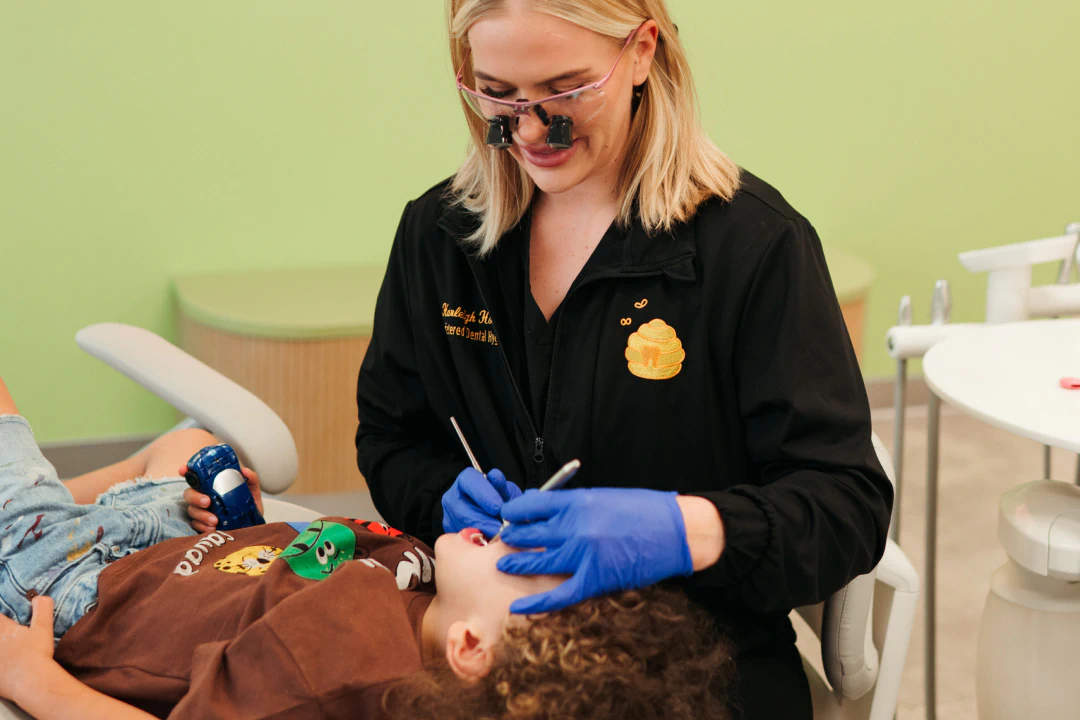
A pediatric dental emergency is any urgent dental problem involving pain, trauma, infection, bleeding, swelling, or tooth damage that may need prompt attention from a pediatric dentist. Some emergencies happen after a fall, sports injury, or accident. Others develop from untreated decay, infection, or a toothache that suddenly becomes severe.
Common reasons to call a children’s emergency dentist include:
- Severe tooth pain
- A knocked-out tooth
- A broken, chipped, or cracked tooth
- Facial swelling
- A dental abscess or infection
- Bleeding from the gums, lips, tongue, or cheeks
- A tooth that has been pushed out of position
- Pain that affects chewing, sleeping, or daily comfort
- Dental trauma from a fall, play accident, or sports injury
Even if you are unsure whether your child needs to be seen right away, calling our practice can help you understand the next best step.
Pediatric Dentistry for a Lifetime of Oral Health
Visit the Hive for Happy, Healthy Smiles
Why Is Urgent Dental Care Important For Your Child’s Oral Health?
Urgent pediatric dental care helps protect your child’s smile when pain, infection, or injury cannot wait for a routine visit. Fast evaluation may help relieve discomfort, reduce swelling, protect the tooth, and prevent complications from becoming more serious.
Children’s dental emergencies should be handled with their age, comfort level, oral development, and emotional needs in mind. A pediatric dentist can evaluate whether the tooth, gums, jaw, or surrounding tissues have been affected and recommend treatment based on your child’s specific situation.
Prompt care may be especially important when a child has:
- Severe tooth pain that does not improve
- Swelling in the gums, jaw, or face
- A broken or displaced tooth
- A knocked-out permanent tooth
- Signs of infection
- Dental trauma involving the mouth or jaw
Dental infections can spread when left untreated, and trauma can sometimes affect more than what is visible. Timely care gives your child the best chance to receive appropriate treatment before pain, damage, or infection progresses.
What Are The Main Signs Your Child May Need Emergency Dental Care?
Some dental concerns are easy to recognize, while others may be more subtle. If your child is uncomfortable, avoiding food, crying from tooth pain, or showing visible signs of swelling or injury, it is time to call for guidance.
- Severe tooth pain that does not improve: A toothache that interferes with eating, sleeping, chewing, or normal activity should be evaluated. Severe pain may be connected to decay, infection, trauma, or irritation inside the tooth.
- Broken, chipped, or cracked teeth: Tooth damage can expose sensitive inner layers of the tooth or create rough edges that bother the tongue, cheek, or lips. A careful exam and digital X-rays may be needed to determine the best treatment.
- Swelling, infection, or abscess: Swelling around the gums, jaw, or face can be a sign of infection. A dental abscess may cause pain, sensitivity, fever, a bad taste in the mouth, or visible swelling near the tooth.
- Dental trauma from a fall, sport, or accident: Mouth injuries can affect the tooth, root, nerve, surrounding bone, or developing permanent teeth, even when the tooth looks mostly normal.
What Should You Do If Your Child Experiences A Dental Emergency?
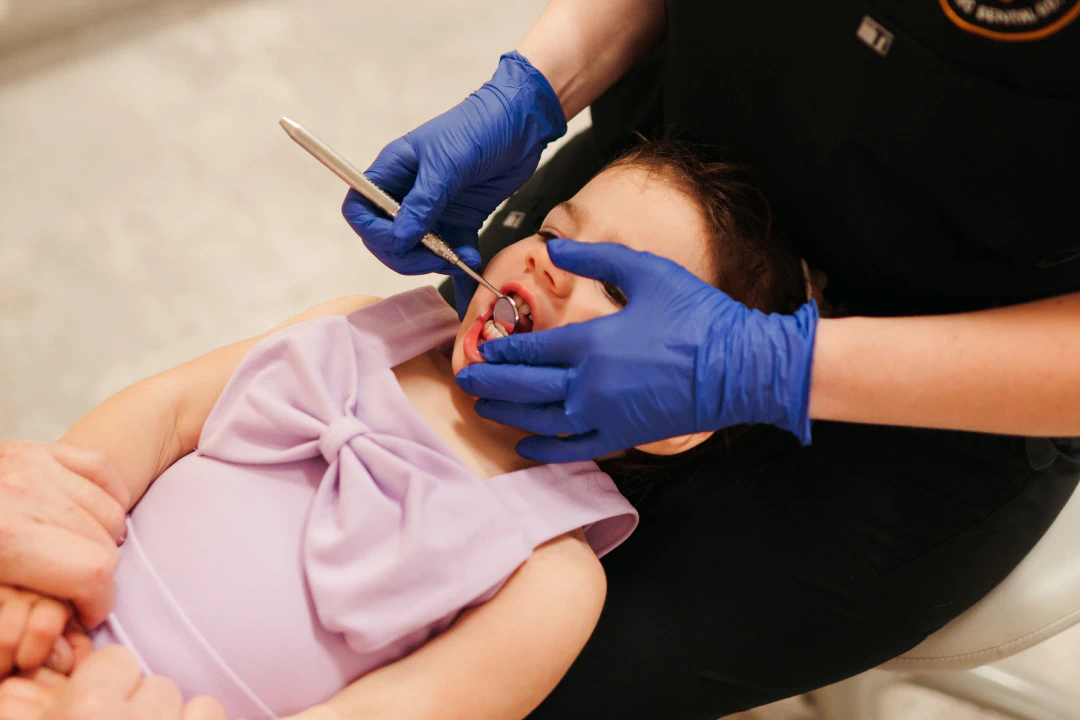
If your child has a dental emergency, stay calm and focus on comfort, safety, and quick communication with a pediatric dental team. Your response in the first few minutes can make a meaningful difference.
Helpful first steps include:
- Reassure your child and help them stay as calm as possible.
- Rinse the mouth gently with warm water.
- If a tooth is broken, save any pieces if you can find them.
- Apply a cold compress to the outside of the cheek or jaw to help reduce swelling and discomfort.
- Do not place aspirin directly on the gums or tooth.
- Call Honey Bee Pediatric Dental Co. for guidance.
- Seek emergency medical care if there is serious facial trauma, uncontrolled bleeding, trouble breathing, trouble swallowing, loss of consciousness, or concern about a head or jaw injury.
In some cases, our pediatric dental team may recommend that your child receive dental care first. In other situations, we may recommend a dental visit so we can examine the tooth, take images if needed, and discuss the right treatment.
What Should I Do If My Child Knocks Out A Tooth?
A knocked-out tooth needs quick attention, especially if it is a permanent tooth. What you should do depends on whether the tooth is a baby tooth or a permanent tooth.
What To Do For A Knocked-Out Baby Tooth
If your child knocks out a baby tooth, do not try to place it back into the socket. Reimplanting a baby tooth can damage the developing permanent tooth underneath.
Instead:
- Find and save the tooth if possible.
- Have your child rinse gently with warm water.
- Apply a cold compress if there is swelling.
- Call our practice for instructions.
- Watch for bleeding, pain, swelling, or changes in how nearby teeth look.
A pediatric dentist can evaluate the area and check for injury to the gums, nearby teeth, and developing permanent tooth.
What To Do For A Knocked-Out Permanent Tooth
If your child knocks out a permanent tooth, call immediately. Quick action may improve the chance of saving the tooth.
Helpful steps include:
- Find the tooth.
- Hold it by the crown, not the root.
- If it is dirty, rinse it gently with water.
- Keep the tooth moist.
- Do not scrub the root.
- Call our practice right away for guidance.
A knocked-out permanent tooth is one of the most time-sensitive forms of emergency dental care for kids, so it is important to act quickly.
What Should I Do If My Child Has Facial Swelling Or A Tooth Abscess?
Facial swelling or a possible abscess should be evaluated promptly. A tooth abscess is often linked to infection, and untreated infections can become serious.
Call our practice if your child has:
- Swelling around the gums, cheek, jaw, or face
- Severe tooth pain
- Sensitivity to chewing or temperature
- A bad taste in the mouth
- Pus near the gums
- Fever with dental pain
- A bump or pimple-like area on the gums
Our team can evaluate the cause of the swelling and recommend appropriate care. If swelling is severe, affects breathing or swallowing, or is accompanied by serious illness, seek emergency medical care.
How Does Honey Bee Pediatric Dental Co. Treat Pediatric Dental Emergencies?
Our approach to urgent dental care for children begins with listening. We know dental emergencies can be stressful for parents and frightening for children, so our team focuses on clear communication, gentle care, and practical next steps.
- Emergency guidance by phone: When you call, our team will help you understand what may need to happen next. Depending on your child’s symptoms, we may recommend an urgent dental visit or emergency medical care.
- A child-focused evaluation: During the visit, we evaluate your child’s symptoms, comfort level, dental development, and treatment needs while taking time to answer parent questions.
- Digital dental imaging when needed: Digital X-rays, panoramic X-rays, or intraoral pictures may be used to assess the tooth, root, jaw, and surrounding structures.
- A personalized emergency treatment plan: Treatment depends on the type of emergency and may include smoothing a chipped tooth, tooth-colored fillings, dental crowns, pulpal therapy, extractions, monitoring, or referral when needed.
- Comfort-focused care options: For children who need extra support, we may discuss nitrous oxide, oral conscious sedation, in-office IV sedation, or general anesthesia in a hospital setting when clinically appropriate.
- Parent education and follow-up: After emergency care, we provide instructions for healing, home care, prevention, and follow-up so parents feel informed and confident.
When Should You Take Your Child To The ER Instead Of The Dentist?
Some injuries need medical emergency care before dental treatment. If your child has serious trauma or symptoms that may affect their overall health, seek emergency medical care right away.
Emergency medical care may be needed for:
- Uncontrolled bleeding
- Trouble breathing
- Trouble swallowing
- Serious head injury
- Possible jaw fracture
- Severe facial trauma
- Loss of consciousness
- Significant swelling that affects the airway or overall health
For toothaches, chipped teeth, knocked-out teeth, dental abscesses, or dental trauma without serious medical symptoms, call our pediatric dental team for guidance. If the situation requires medical care first, we will help you understand that next step.
How Can Parents Help Prevent Dental Emergencies In Children?
Not every accident can be prevented, but many urgent dental problems can be reduced with consistent preventive care, protective habits, and early treatment.
Parents can help lower the risk of children’s dental emergencies by encouraging:
- Regular pediatric dental exams and cleanings
- Daily brushing and flossing
- Mouthguards during sports or high-impact activities
- Early care for cavities or tooth pain
- Healthy nutrition that supports strong teeth
- Avoiding hard chewing habits, such as ice or hard candy
- Age-appropriate home care routines
- Guidance for thumb sucking, pacifier habits, or other oral habits when needed
At Honey Bee Pediatric Dental Co., we believe parent education is a key part of pediatric dentistry. Through anticipatory guidance, prevention techniques, and practical home-care support, we help families build healthy routines before dental concerns become urgent.
How Much Does Urgent Dental Care For Kids Cost?
The cost of urgent dental care for kids depends on your child’s symptoms, the type of emergency, and the treatment needed. A minor chipped tooth may require a different level of care than a dental infection, knocked-out tooth, or injury involving multiple teeth.
Factors that may affect cost include:
- Emergency exam
- Digital X-rays or additional imaging
- Type of treatment needed
- Sedation needs, if appropriate
- Follow-up care
- Insurance benefits
- The complexity of the injury or infection
Honey Bee Pediatric Dental Co. also offers a Pediatric Dental Membership Plan, which may be helpful for some families. The best way to understand your child’s next steps is to call our office so our team can guide you based on the situation.
Why Choose Honey Bee Pediatric Dental Co. For Your Child’s Emergency Dentist?
When your child needs urgent dental care, you deserve a team that understands children’s needs and helps parents feel informed and supported. Families choose Honey Bee Pediatric Dental Co. for:
- Board-certified pediatric dentists: Our team has advanced training in children’s dental care and understands how to evaluate urgent dental concerns with your child’s age, comfort, development, and long-term oral health in mind.
- A modern, kid-friendly office: Our dental office, known as “The Hive,” is designed to help children feel welcome, calm, and comfortable during their visit.
- Parent education and anticipatory guidance: We partner with parents by providing age-specific guidance, prevention strategies, and practical home-care tips to support healthy smiles.
- Emergency care tailored to children: Our pediatric dental team understands that children have unique dental, emotional, and developmental needs, and we tailor care accordingly.
- Sedation options when appropriate: For children who need extra support during treatment, we may discuss nitrous oxide, oral conscious sedation, in-office IV sedation, or general anesthesia in a hospital setting when clinically appropriate.
- After-hours emergency call line for established patients: Established patients have access to an after-hours emergency call line for additional guidance when urgent dental concerns happen outside normal office hours.

Schedule Pediatric Emergency Dentistry For Your Child
If your child has a toothache, dental injury, broken tooth, knocked-out tooth, swelling, or another urgent dental concern, call Honey Bee Pediatric Dental Co. today. Our team provides pediatric emergency dentistry in Lawrence, Lenexa, and Prairie Village, KS, with a caring approach designed for infants, children, and teens.
Our office is open Monday through Thursday from 7:30 AM to 4:00 PM and Friday from 7:30 AM to 3:00 PM, with weekend hours closed.