
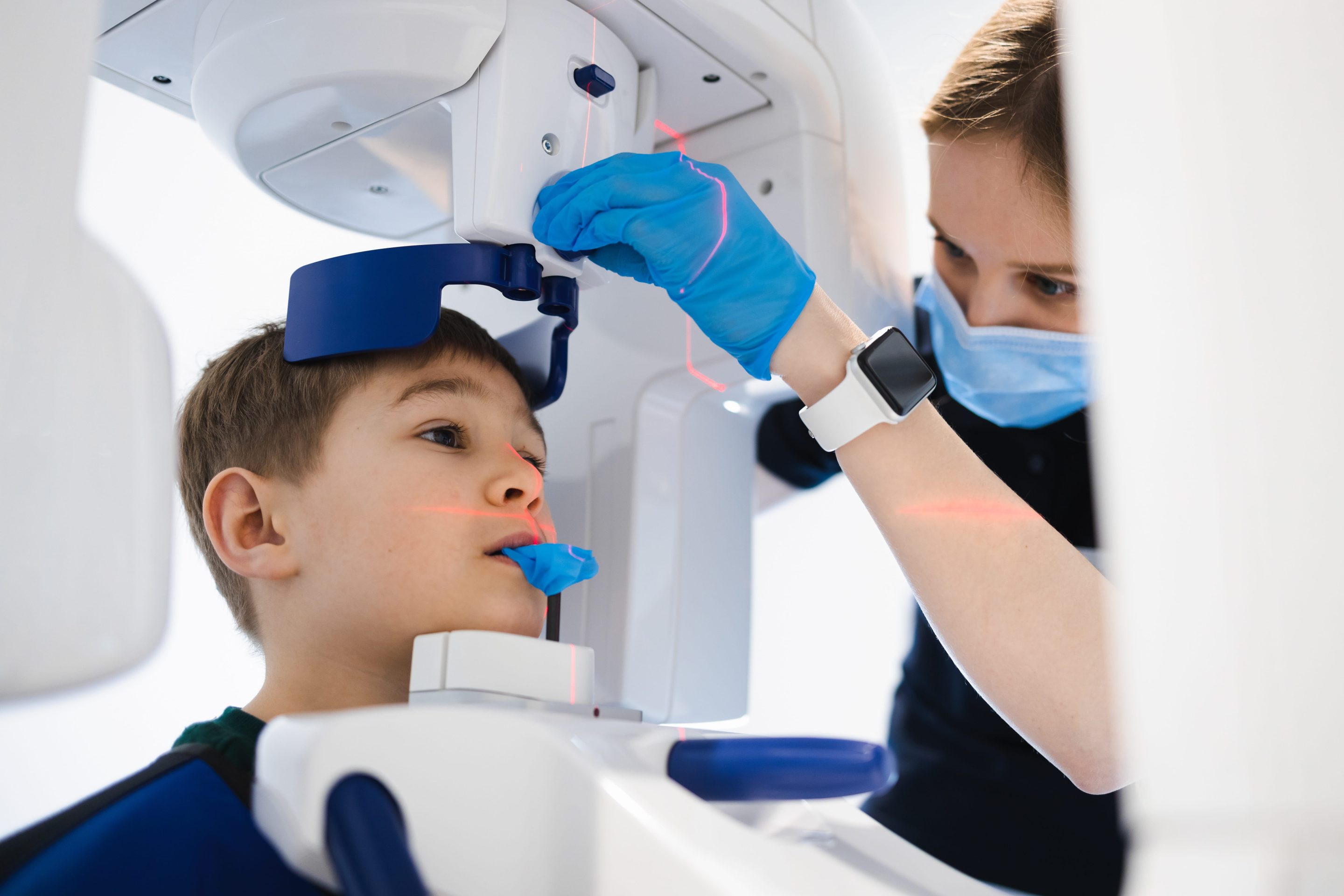
Are Pediatric Dental X-Rays Safe for Kids?
At Honey Bee Pediatric Dental Co., we provide pediatric dental X-rays for children and families in Lawrence, KS, Lenexa, KS, and Prairie Village, KS. Parents often ask whether dental X-rays are safe for kids. The short answer is yes. When used appropriately and based on a child’s individual needs, modern pediatric dental X-rays are considered safe and an important part of preventive dental care.
Today’s digital dental X-rays use very low radiation levels and are taken only when clinically necessary. Our board-certified pediatric dentists follow risk-based guidelines, which means images are recommended only when they support your child’s oral health and development.
If you have questions or would like to schedule a visit, we invite you to call either Honey Bee Pediatric Dental Co. location to speak with our team.
This Article will address
- Are pediatric dental X-rays safe for kids?
- Why children may need dental X-rays
- How much radiation dental X-rays expose children to
- Safety measures used during pediatric dental X-rays
- When a child may need their first dental X-ray
- How often kids typically need dental X-rays
- What parents should expect during a dental X-ray appointment
- Types of pediatric dental X-rays
- Questions parents can ask about dental X-rays
- Why families choose Honey Bee Pediatric Dental Co. for pediatric dental X-rays
Why Does My Child Need Dental X-Rays?
Dental X-rays allow our pediatric dentists to see areas that are not visible during a clinical exam alone. Even with a careful visual evaluation, some concerns can remain hidden beneath the surface.
Pediatric dental X-rays help us evaluate:
- Cavities between teeth that cannot be seen directly
- Tooth development and eruption patterns
- Bone health and signs of infection
- Dental trauma or injury
- Growth and development concerns
- Early indicators that may support future orthodontic planning
How Much Radiation Do Dental X-Rays Expose Children To?
A common concern among parents is radiation exposure. Digital dental X-rays expose children to very small amounts of radiation, far lower than older imaging methods. The exposure from a dental X-ray is minimal and comparable to the everyday background radiation we all experience.
At Honey Bee Pediatric Dental Co., we follow current professional guidelines to ensure that X-rays are taken only when they provide meaningful diagnostic value. The goal is to gather the information we need while keeping exposure as low as reasonably possible.
What Safety Measures Are Taken During Pediatric X-Rays?
Your child’s safety is always our priority. We take multiple steps to ensure pediatric dental X-rays are performed carefully and thoughtfully.
Safety measures include:
- Taking only images that are clinically necessary
- Using proper positioning to reduce the need for retakes
- Utilizing child-sized equipment when appropriate
- Applying protective measures based on clinical standards, such as protective coverings or thyroid collars when indicated
- Explaining the process clearly to parents before imaging begins
How We Help Avoid Unnecessary Retakes
We take extra care to ensure images are captured accurately the first time. Our approach includes:
- Calm coaching and age-appropriate explanations for children
- Using intraoral photos and clinical exams together to reduce guesswork
- Careful positioning and efficient workflows to capture clear images quickly
At What Age Should a Child Get Their First Dental X-Ray?
There is no single age that applies to every child. The timing of a child’s first dental X-ray depends on several factors, not just age alone.
We consider:
- Tooth eruption and spacing
- Cavity risk and oral hygiene habits
- Symptoms such as pain or swelling
- Growth and developmental monitoring needs
Our team also provides infant evaluations and ongoing growth monitoring to help guide decisions about when imaging may be appropriate.
How Often Do Kids Need Dental X-Rays?
The frequency of dental X-rays is based on your child’s individual risk factors. Children with a higher risk of cavities or dental concerns may need images more often than those with lower risk.
Factors we consider include:
- History of cavities
- Tight spacing between teeth
- Diet habits
- Oral hygiene routines
- Developmental changes
- Previous dental findings
What Should Parents Expect During a Child’s Dental X-Ray Appointment?
We understand that new experiences can feel intimidating for children and parents alike. Our team works to make dental X-rays a calm and positive part of the visit.
What Happens Step by Step
- We explain the process to both the parent and child in simple terms
- Your child is positioned comfortably
- Images are taken quickly once positioned
- We review the findings with you and discuss next steps if anything is detected
What Types of Pediatric Dental X-Rays Might Be Used?
Different types of dental X-rays provide different information. We select imaging based on what will best support your child’s care.
Common types include:
- Bitewing X-rays, which help detect cavities between teeth
- Periapical X-rays, which show the entire tooth and surrounding bone
- Panoramic X-rays, which provide a broad view of the jaws and developing teeth
- Intraoral pictures, which complement X-rays by documenting visible areas of the mouth
What Questions Should Parents Ask About Dental X-Rays?
- Why does my child need X-rays today?
- What type of images are you taking and what will they show?
- How does my child’s cavity risk affect how often X-rays are needed?
- What safety steps are used during pediatric X-rays?
- Can existing X-rays from another dental office be used?
Why Choose Honey Bee Pediatric Dental Co. for Your Child’s Dental X-Rays?
Families choose Honey Bee Pediatric Dental Co. because we focus on education, prevention, and compassionate care.
Our approach includes:
- Education-first care and anticipatory guidance for parents
- Preventive dentistry tailored to each child
- Digital dental X-rays and panoramic imaging
- Judgment-free communication and clear explanations
- Experience working with anxious children and those with special needs, with collaboration as needed
- An after-hours emergency call line for established patients
Schedule a Pediatric Dental Visit in Lawrence, Lenexa, or Prairie Village, KS
Pediatric dental X-rays play an important role in keeping your child’s smile healthy and strong. When recommended thoughtfully and based on individual needs, they provide valuable information while maintaining a strong focus on safety.
At Honey Bee Pediatric Dental Co., we are proud to serve families in Lawrence, KS, Lenexa, KS, and Prairie Village, KS. If you have questions about dental X-rays or would like to schedule an appointment for your child, please call either location to speak with our team.
Sources
- American Academy of Pediatric Dentistry. Guidelines on Radiographic Examination.
- American Dental Association. Dental X-rays and Radiation Safety.
- National Institute of Dental and Craniofacial Research. Dental Imaging and Oral Health.